info@gassafe1.com
 0121 503 0066 / 07514 905361




You Should Never Know We Were There
15 September 2026 « Back to Blog Posts
Ask people what puts them off having heating work done and very few say the cost first. They say the disruption. The dust sheets that never appeared, the black water on the hall carpet, the brick dust trodden through the house, the old boiler left propped against the garden fence for a fortnight. Plenty of people put off a job they know needs doing because of what happened last time.
Clean working is not a nice extra on top of good engineering. It is part of it. Here is what it actually involves, so you know what to expect from us — and what to ask of anyone else you let into your home.
Heating work is messier than most trades, and that is the point
Fitting a kitchen makes sawdust. Heating work involves opening up a system that has been sitting closed for years. The water inside an older central heating system is not water as you would recognise it: it is black, it smells, and it is full of iron oxide sludge that stains carpet permanently on contact. Add lifted floorboards, drilling into brick, cutting a flue hole through an external wall and carrying a cast-iron boiler down a staircase, and you have a job with genuine potential to wreck a house.
Which is exactly why the preparation matters more here than almost anywhere else. A good engineer spends the first half-hour of a boiler swap not touching the boiler at all.
What good preparation looks like
- Protection along the whole route, not just the work area. Sheets from the front door to the boiler, because the mess travels on boots and on the boiler being carried out.
- Overshoes on, every time. Including the fourth trip back to the van.
- Furniture moved properly and covered, not shuffled aside and worked around.
- Doorways closed off before any cutting or drilling starts, so dust stays in one room.
The sludge problem, and how it should be handled
This is the one that ruins homes. Draining a heating system releases every bit of corrosion that has built up inside it over twenty years, and it does not come out politely. Done carelessly it goes on carpets, skirtings and grout, and it does not come out again.
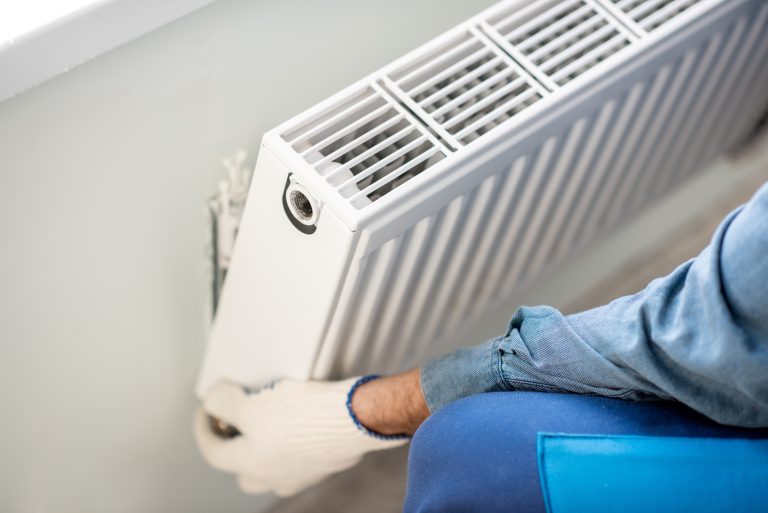
Done properly, the system is drained through a hose run out to a drain outside, radiators are lifted and carried with the ends capped and a tray underneath, and anything that does escape is caught before it touches a floor. When we power flush a system, the machine and its waste stay contained. It is not complicated work, but it is the difference between a tidy job and a new carpet.
Dust, and the twenty minutes at the end
Cutting a flue hole through a cavity wall produces a remarkable amount of brick dust. It should be extracted at source and vacuumed as it is made — not swept up afterwards, which just moves it into the air and onto every surface in the room.
Then there is the part that separates the good jobs from the acceptable ones: the last twenty minutes. Hoovering the room properly rather than kicking the worst of it up. Wiping down the boiler casing and surrounding tiles. Putting the furniture back where it came from, not roughly nearby. Taking the old boiler, the old radiators, the packaging and every offcut away with us, on the day. Then walking round with you before we leave.
That is the standard we work to. When we finish a job, the only evidence we were in your house should be the thing we came to fit.
Why it matters beyond good manners
Tidiness on site tends to reflect tidiness in the work itself. An engineer who leaves a clean floor is usually the same engineer who clips pipework straight, boxes it in neatly, makes good around the flue properly and labels the controls. An engineer who does not care about your hall carpet is unlikely to care much about what the pipework looks like once the casing is on.
There is a safety dimension too. In properties built before 2000, drilling or cutting can disturb materials that need identifying first — Artex ceilings and some older flue components among them. A competent engineer knows to stop and assess rather than cut first and find out later. That habit of care is the same habit that puts the sheets down.
What to ask before you book anyone
- Will you sheet the route in as well as the room you are working in?
- How will you drain the system, and where does the old water go?
- Are you taking the old boiler and packaging away on the day, or am I disposing of it?
- Will you make good around the flue and the pipework?
Any engineer worth having will answer all four without hesitating, because they have thought about it before. A vague answer tells you what the finish will look like.
Heating work without the mess
We are a family-run, Gas Safe registered heating firm based in Halesowen, working across Stourbridge and the surrounding West Midlands. Which? Trusted Traders, with over 40 years of collective experience, and a great deal of that experience is in other people’s homes — which is why we treat them accordingly. Call 0121 503 0066 or use our contact form for a quote.