info@gassafe1.com
 0121 503 0066 / 07514 905361




Landlord Gas Safety Checks: What the Law Actually Requires
29 October 2026 « Back to Blog Posts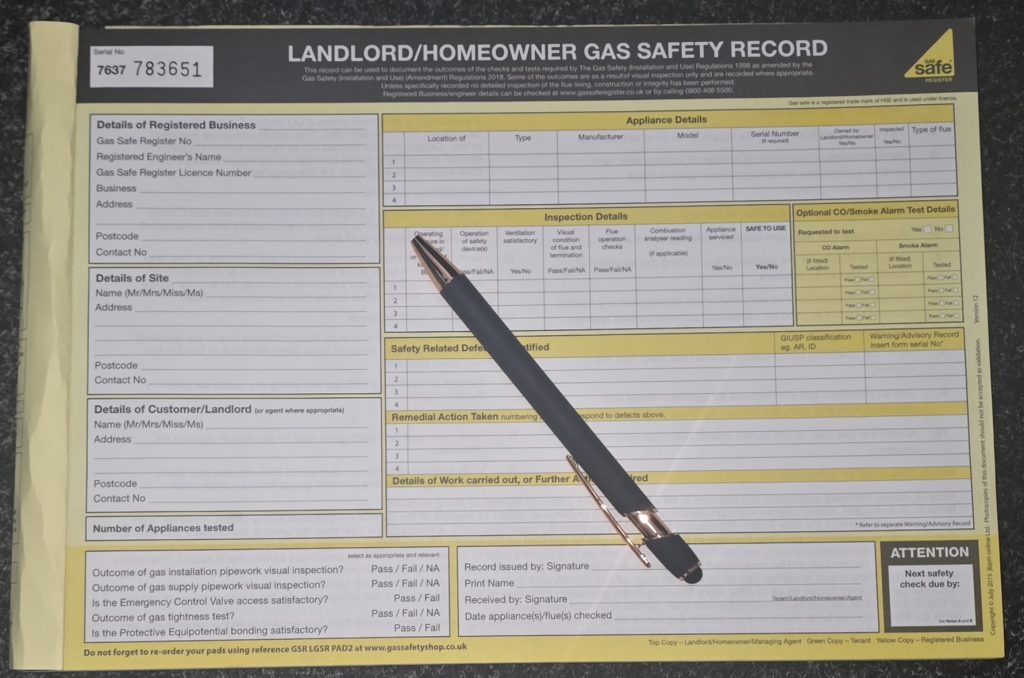
Most landlords know they need “a CP12” every year. Fewer could say exactly what it covers, when the twelve months really runs from, or what else the law expects of them. The rules are short and not complicated, but they are enforced by the Health and Safety Executive (HSE) and breaking them is a criminal offence. It is worth ten minutes to get them straight.
Three duties, not one
The Gas Safety (Installation and Use) Regulations 1998 give landlords three separate jobs:
- An annual gas safety check on every gas appliance and flue you provide, carried out by a Gas Safe registered engineer.
- A record of that check, given to your tenants.
- Maintenance: keeping gas pipework, appliances and flues in a safe condition all year round.
Most of the trouble landlords get into comes from treating the first as if it took care of the other two.
The definition of a landlord is also wider than people expect. It covers houses, flats and HMOs, and the HSE is clear that taking in a paying lodger makes you a landlord for these purposes too.
What “CP12” means
The name is a leftover. It stands for CORGI Proforma 12, from the days before Gas Safe Register replaced CORGI in 2009. The proper title is the Landlord Gas Safety Record, but everyone in the trade still calls it a CP12, and so do we.
The deadline, and the two-month window
The check must be done every twelve months. There is no grace period afterwards: a record that expired last week is an expired record.
What many landlords miss is the flexibility at the other end. Since 2018 the regulations have worked like an MOT. You can have the check done up to two months before it is due and still keep the original expiry date. Have it done in month eleven and next year’s deadline does not creep forward. Go earlier than ten months and the clock simply resets from the new date. Go later than twelve and you are already in breach.
Two more timing rules matter:
- A new appliance needs its first check within twelve months of being installed.
- Before a new tenancy starts, the check must have been done within the previous twelve months. A record that is still in date can be passed straight to the new tenant.
What the engineer checks
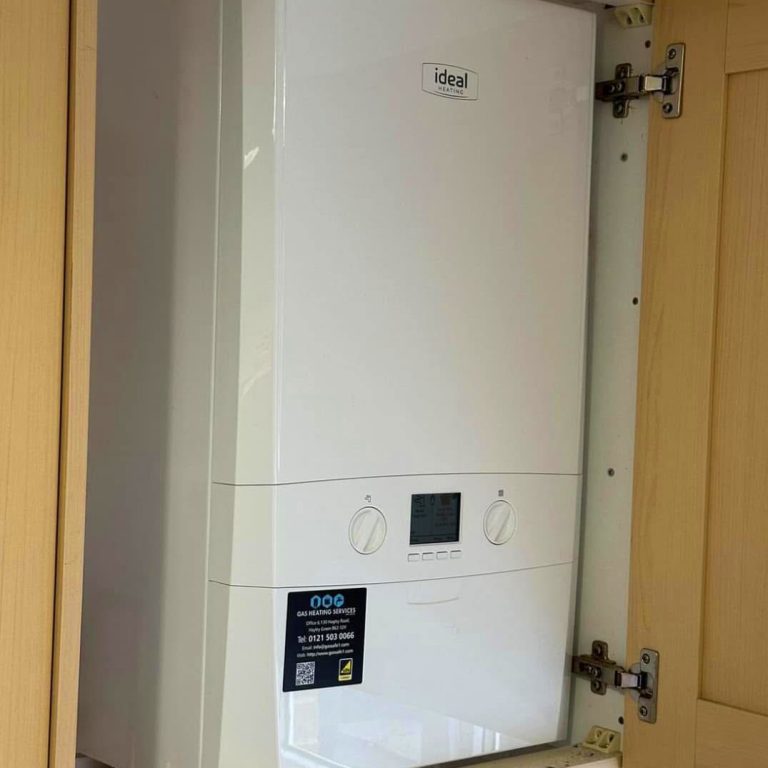
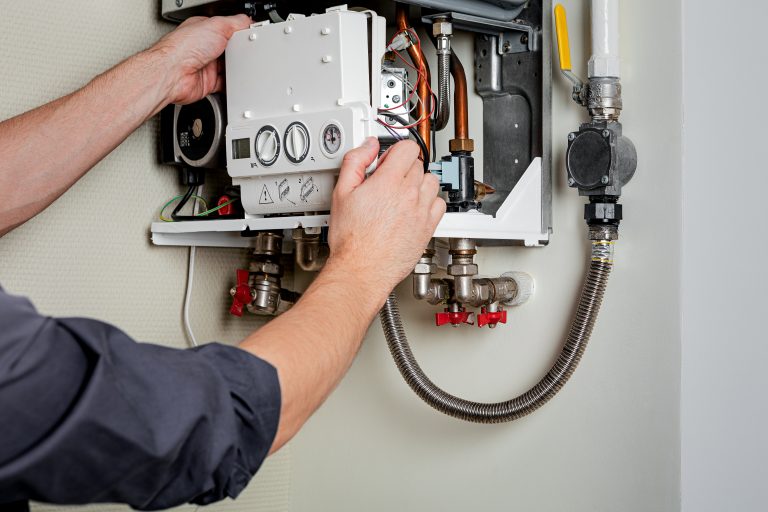
A landlord gas safety check covers every gas appliance you provide, such as the boiler, a gas fire, a hob or a cooker, and the flues that serve them. The engineer confirms that each appliance is burning safely, that flues are carrying combustion gases away, that ventilation is adequate and that safety devices work.
We also carry out a gas tightness test on the pipework. The annual check does not strictly require it, but the HSE recommends it and so do we.
The record must then show the address, your name and address (or your agent’s), each appliance and flue checked and where it is, the date, any defect found and what was done about it, and the engineer’s name, signature and Gas Safe registration number. If a defect is found, you are required to deal with it.
A safety check is not a service
This is the misunderstanding that costs landlords most. A gas safety check confirms an appliance is safe to use on the day. It does not involve stripping, cleaning or adjusting anything. The HSE puts it bluntly: you should not assume “that carrying out an annual gas safety check will be sufficient to provide effective maintenance”.
Your maintenance duty is separate. The HSE’s guidance is that appliances and flues should be serviced in line with the manufacturer’s instructions, or annually where those are not available. There is a commercial reason too: boiler manufacturers make an annual service a condition of the warranty. A boiler that has had six CP12s and no services is safe on paper and out of warranty.
The sensible answer is to have both done on the same visit: one appointment, one disruption for the tenant, and both sets of paperwork.
Appliances that belong to the tenant
If your tenant brings their own cooker or fire, the appliance itself is their responsibility, not yours. The pipework that feeds it is still yours to maintain, and the HSE recommends including any flue it is connected to in your check. Note tenant-owned appliances on your own records, so there is no argument later about who was responsible for what.
Records and paperwork
- Give existing tenants a copy within 28 days of the check.
- Give new tenants a copy before they move in.
- For lets of less than 28 days, display a copy in the property.
- Keep each record until at least two further checks have been done, which means a minimum of two years.
You can store records electronically, provided they can be printed when needed, are secure and identify the engineer. You can also send the tenant an electronic copy if they are happy to receive it that way and can open it, but you must give them a paper copy if they ask. Either way, keep proof of when and how you sent it.
If the tenant will not let you in
You must not force entry. What the law asks is that you can show you took all reasonable steps. The HSE’s advice is to leave a notice saying an attempt was made, with your contact details, then write explaining that the check is a legal requirement and is for the tenant’s own safety, and invite them to arrange an appointment that suits them. Inspectors will look for at least three attempts, although what counts as reasonable depends on the circumstances. Keep a record of every letter, message and visit.
Carbon monoxide alarms
Separate rules cover alarms. Since 1 October 2022, landlords in England must fit a carbon monoxide alarm in every room used as living accommodation that contains a fixed combustion appliance, which includes a gas boiler or a gas fire. Gas cookers are excluded. You must check that alarms work on the first day of a new tenancy, and repair or replace a faulty one once the tenant reports it. Ignoring a remedial notice from the council can mean a fine of up to £5,000. These alarm rules do not apply to a lodger sharing your own home, although an alarm there is still a sensible precaution.
Section 21 has gone. The duty has not
For years, many landlords thought about gas certificates mainly in terms of possession, because a Section 21 notice could fail if the tenant had not been given the gas safety record. Section 21 “no-fault” evictions ended for private landlords in England on 1 May 2026, and it would be easy to assume the paperwork now matters less.
It does not. The gas safety regulations are health and safety law, enforced by the HSE, and they have not changed. In the HSE’s words, a landlord who breaks them is “putting lives at risk and breaking the law”, and enforcement “could result in a substantial fine and/or a custodial sentence”.
A simple routine that keeps you compliant
- Put the expiry date in your diary and book the check for month eleven.
- Have the boiler serviced on the same visit.
- Send the tenant their copy within 28 days, and keep proof.
- File the record where you can find it, and keep it until two further checks have been done.
- Test the carbon monoxide and smoke alarms at the start of every tenancy.
This article is a guide to the main rules in England, not legal advice. If your situation is unusual, read the HSE’s guidance for landlords or take advice.
Book your landlord gas safety check
We are a family-run, Gas Safe registered heating firm in Halesowen with over 40 years of collective experience. We work for landlords and letting agents across Halesowen, Stourbridge and the surrounding West Midlands, from single properties to portfolios and HMOs.
We can carry out the safety check and the annual service on the same visit, and you get a clear record for your files and your tenant. Call 0121 503 0066 or use our contact form to book.