info@gassafe1.com
 0121 503 0066 / 07514 905361



Modernising Your Radiators: Vertical, Space-Saving and Smarter
25 September 2026 « Back to Blog Posts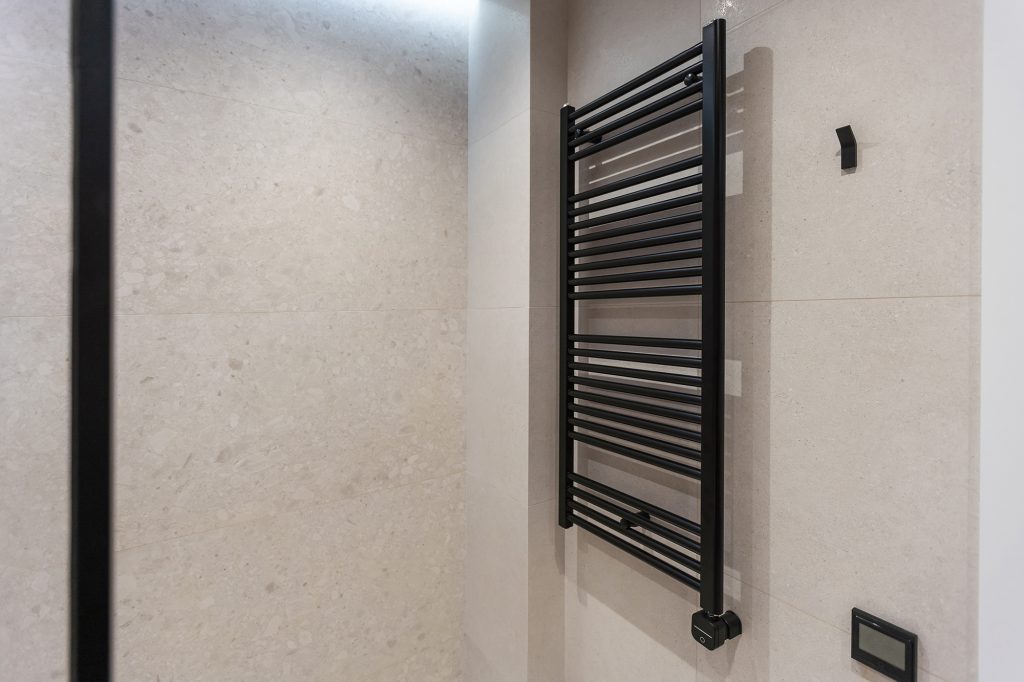
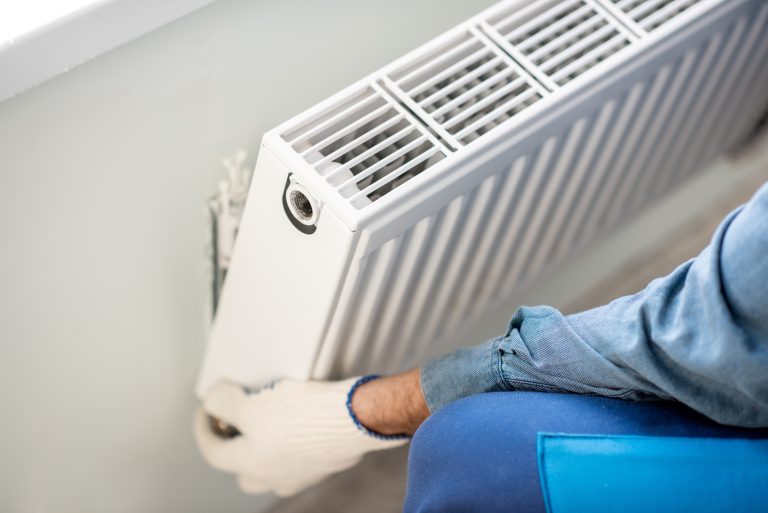
Radiators are the forgotten half of a heating system. People spend carefully on a new boiler, then connect it to the same radiators that were on the wall in 1998 — corroded inside, undersized, and taking up the one stretch of wall where a dresser would fit. Upgrading them is one of the more satisfying jobs we do, because the difference is visible as well as felt.
Why old radiators hold a system back
Inside an ageing radiator, corrosion builds into a sludge that settles along the bottom. That is why old radiators go cold at the base while the top stays hot: the water is not circulating through the whole panel. Output drops, the boiler works harder to compensate, and rooms take longer to warm up. Single-panel radiators from the 1990s were also frequently undersized for the room even when new.
Modern panel radiators produce more heat from a smaller footprint, so an upgrade often means a better-heated room from a physically smaller unit. That is where the space starts coming back.
Vertical radiators: the answer to the wall-space problem
Vertical radiators use height instead of width. Instead of a metre and a half of wall that can never be used for anything else, you have a tall, narrow unit occupying a fraction of the space — often somewhere previously written off, like the strip beside a door or the return wall of a chimney breast.
The question we get asked is whether they are less efficient. The honest answer: in pure physics, marginally. A radiator draws cool air in at the bottom and releases warm air at the top, and a wider radiator draws in more air across its length. In a tall, narrow unit the air is largely up to temperature before it reaches the top, so the upper section does less work.
In practice this rarely matters, for two reasons. First, what counts is whether the radiator meets the room’s heat requirement, calculated properly in BTUs — if it does, the room is warm, and the shape is irrelevant. Second, horizontal radiators are constantly obstructed by sofas, curtains and units, which costs far more output than the theoretical difference. A vertical radiator on a clear wall frequently outperforms a horizontal one buried behind a corner suite.
The catch is that a vertical needs correct sizing and, usually, pipework moved — which is why it is worth having done properly rather than swapped like for like.
Kitchens: where every wall is already spoken for
Kitchens are the hardest room to heat well, because the walls are units, splashback, appliances or glazing. There is often nowhere sensible for a conventional radiator, and the one that is there blocks the only free run of worktop. Three options usually solve it:
- A vertical radiator on a narrow section of wall — beside a door, at the end of a run of units, or on the return by a window. Often the neatest answer in a kitchen-diner, where it can be a design feature rather than something to hide.
- A plinth or kickspace heater, fitted into the kickboard beneath the units and connected to the central heating. It is completely invisible, frees the wall entirely, and warms the floor area where you stand. In a small kitchen this is frequently the best solution available.
- Underfloor heating, if the floor is coming up anyway. Highest cost and most disruption, but it removes the problem permanently and suits a tiled kitchen floor well.
Elsewhere in the house the same thinking applies: skirting-level heating along a wall in a room with no free space, a tall narrow radiator on a landing, or a heated towel rail in a utility doing two jobs at once.
The part most people miss: size them for lower temperatures
This is the point worth taking away. Most homes run their boiler hotter than they need to. Turning the flow temperature down lets a condensing boiler actually condense, which is where its efficiency comes from — the Energy Saving Trust points to research from Nesta showing that dropping to around 60°C improves boiler efficiency by close to 4%.
The reason people turn it back up is that their radiators are too small to heat the room at a lower temperature. Fit slightly larger or higher-output radiators and that constraint disappears: you can run the boiler cooler, permanently, and still be warm. The upgrade pays you back every month.
It also future-proofs the house. Heat pumps run at much lower flow temperatures than boilers, and the single biggest cost when converting is usually replacing radiators. Sizing generously now means that decision is already made, whenever you come to it.
Timing, and doing it properly
If you are having a kitchen or bathroom refitted, sort the heating before the units go in. Moving pipework is straightforward with the floor up and the walls bare, and awkward and expensive afterwards. Tell us at the planning stage, not when the fitter is on site.
And when radiators are changed, the system should be flushed, dosed with inhibitor and properly balanced afterwards, with a magnetic filter fitted if there is not one already. New radiators plumbed into dirty water will be sludged up again within a few years.
Talk to us about your radiators
We install, replace and upgrade radiators across Halesowen, Stourbridge and the surrounding West Midlands — vertical radiators, designer panels, plinth heaters and full system upgrades. We will size them properly for the room rather than guessing from what is already on the wall. Call 0121 503 0066 or use our contact form.