info@gassafe1.com
 0121 503 0066 / 07514 905361




Warm Air Heating: Keep It, Upgrade It or Convert?
10 October 2026 « Back to Blog Posts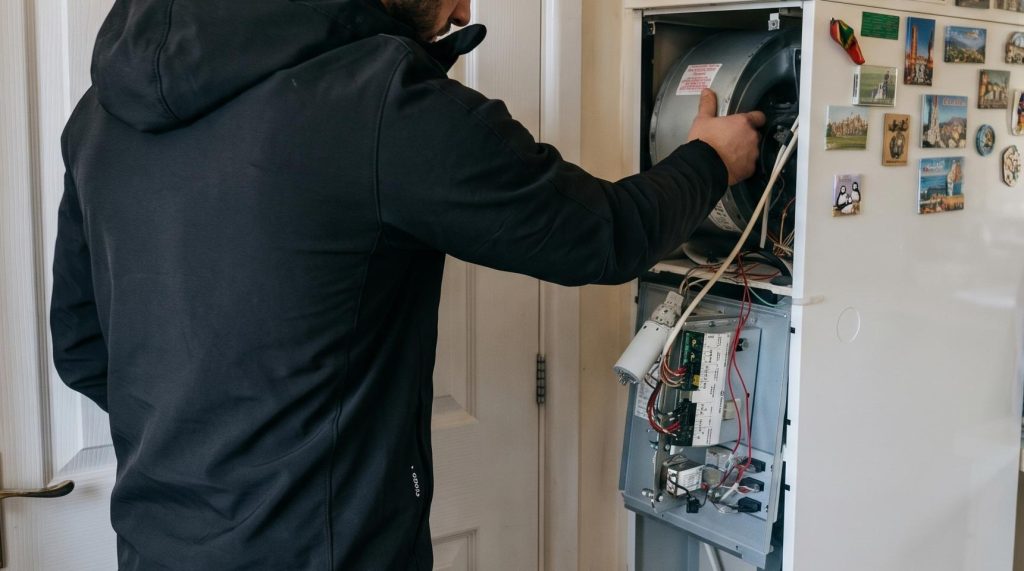
If your home has grilles in the floors or walls where other houses have radiators, and a tall cupboard somewhere in the middle of the house that hums when the heating comes on, you have warm air heating. It went into a great many homes on the estates built around Halesowen, Stourbridge and the wider Black Country from the 1960s to the 1980s, and plenty of those systems are still running.
Sooner or later, most owners are told the same thing by an engineer who has come to look at it: it is obsolete, nobody works on these any more, and it all needs ripping out for radiators. Sometimes that is the right advice. Far more often it is what you are told by someone who is not qualified to touch it. Here is what your options really are.
How warm air works, and why people keep it
A warm air heater burns gas to heat air directly, and a fan pushes that air through ducts to grilles in each room. There is no water in the heating circuit at all. That brings some real advantages: the house warms up quickly, there are no radiators taking up wall space, and there are no heating pipes to leak or freeze.
The usual complaints are dust, draughts and uneven temperatures. These nearly always trace back to a clogged filter, a tired fan or an old on/off thermostat, not to the idea of warm air itself. A system in good order is quiet and comfortable.
Not every Gas Safe engineer can work on it
This is the part most owners are never told. Gas Safe registration is not a single licence. Each engineer is qualified for specific categories of work, and ducted warm air heaters are a category of their own, with a separate assessment (known in the trade as DAH1). An engineer who is fully qualified on boilers is not automatically allowed to work on your warm air unit.
Because radiator systems are so much more common, most engineers never take the warm air qualification. That is why so many owners struggle to find anyone to service their system, and why “rip it out” is such a common recommendation. Before anyone works on yours, ask to see their Gas Safe ID card. The categories they are qualified for are listed on the back, and warm air should be one of them.
Warm air heating is a core part of our work, and Johnson & Starley units in particular.
Service it every year, without exception
With a boiler, the products of combustion and the water in your radiators never come near each other. In a warm air heater, the only thing separating the burner from the air blown into every room is the heat exchanger. If that cracks or corrodes, combustion gases can be carried into the airstream. Many older units also draw the air they burn from inside the house, so a blocked or covered vent is a real hazard, not a technicality.
That is why a warm air service matters so much. A proper one covers:
- A full safety inspection and gas checks
- Cleaning the burner, heat exchanger and filter
- Airflow and fan performance
- Thermostat and control testing
- Carbon monoxide checks
- An efficiency and performance assessment
Between services, the one job that falls to you is the filter. A blocked filter is behind a large share of poor heating and noise complaints. Ask your engineer to show you where it is and how to clean it.
Most faults can be repaired
Fans and motors, control boards, thermostats, ignition components and filters can all be replaced, and on a Johnson & Starley heater that usually means the unit carries on for years. Swapping an old on/off thermostat for a modern proportional control can transform comfort on its own, because the heater runs gently and steadily and stops blasting hot air and then going cold.
Repair stops making sense when the heat exchanger has failed on an old unit, when parts for a very old model can no longer be had, or when the heater is so inefficient that you are paying for it every month in gas.
A word about asbestos
Some older warm air heaters, and the flues and cupboards they were installed in, contain asbestos. Johnson & Starley say so plainly: depending on the age of the heater there is a possibility, and even where the heater itself is clear, it may be found in the installation around it. Left alone and in good condition it is not a cause for alarm. It is a very good reason not to let anyone start pulling an old unit out before it has been checked, and to use a firm that takes protecting your home seriously.
Upgrade option one: a new condensing warm air heater
If the heater has reached the end of its life but the ducts are sound, the simplest answer is a modern warm air heater in the same position. Johnson & Starley’s WarmCair range is built for this. The manufacturer says it will replace almost all existing warm air heaters and is made to fit onto existing ductwork, so the ducts and grilles you already have stay where they are.
The difference in running costs is real. WarmCair heaters are condensing appliances with thermal efficiencies of up to 98%, and Johnson & Starley quote fuel efficiency improvements of over 28% compared with older models. They are available with or without hot water, come with a five-year parts guarantee with labour included for the first two years, and can be fitted with electronic air filtration, which is worth knowing about if dust or pollen is a problem in your house.
One point on controls. Johnson & Starley state that their heat-only WarmCair models need OpenTherm controls, and that fitting anything else invalidates the guarantee. Not every smart thermostat is suitable, so check before you buy one.
Upgrade option two: keep the ducts, change the heat source
The second route is a heat interface unit such as the Johnson & Starley Aquair. It sits where the old heater was and uses the existing ducts, but there is no burner inside it. Hot water from a boiler passes through a coil, and the fan blows air across it.
This suits homes where you want a combi boiler for hot water on demand, or where you want to keep your options open. The Aquair works with gas, electric and oil boilers, and Johnson & Starley say it can be installed alongside an air or ground source heat pump. The ductwork you already own is not a dead end.
Option three: convert to radiators
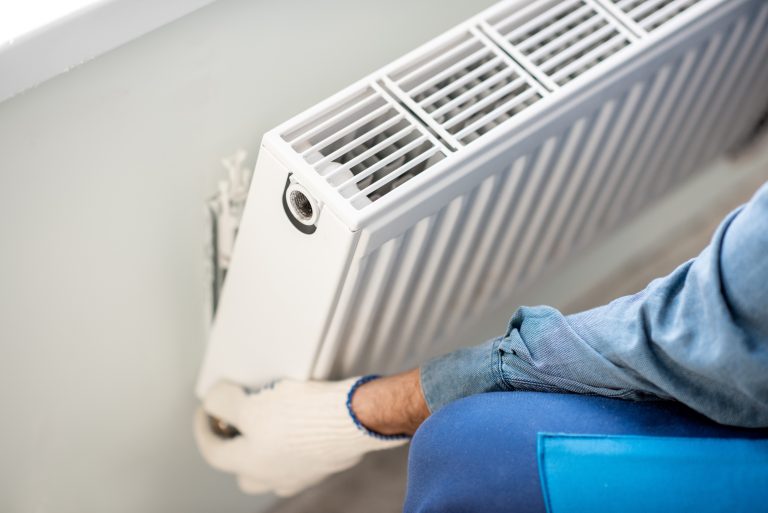
Sometimes conversion is the right call: the house has been extended beyond what the ducts can serve, the ductwork itself is in poor condition, or you simply prefer radiators. It is the most disruptive of the three routes, because it means a new boiler and new pipework to every room. If you go this way, it is worth choosing the radiators properly while you are at it.
How to decide
- The heater is safe and parts are available: service it, repair it and keep it.
- The heater is worn out but the ducts are good: replace it with a condensing warm air heater or a heat interface unit.
- The ducts are the problem, or the house has outgrown them: convert to radiators.
The mistake is skipping straight to the third because nobody qualified ever looked at the first two.
Talk to us about your warm air system
We are a family-run, Gas Safe registered heating firm in Halesowen with over 40 years of collective experience across Halesowen, Stourbridge and the surrounding West Midlands. We service, repair and upgrade warm air systems, with particular experience of Johnson & Starley heaters, and we are Which? Trusted Traders.
You get a thorough service, clear advice about what is worth repairing, and no pressure to replace something that does not need replacing. Call 0121 503 0066 or use our contact form to book.